Trending

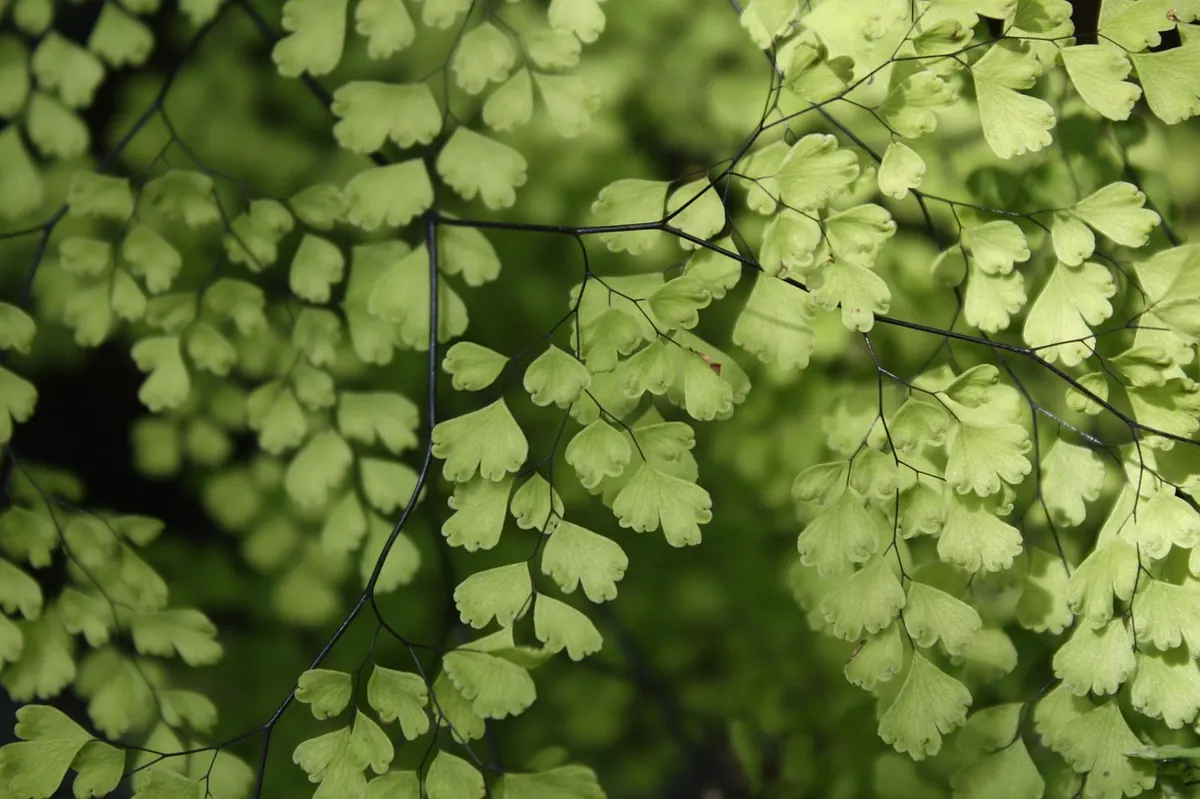
Most indoor ferns do not die of thirst. They die of kindness — of being watered every Sunday because that is what the label said, in a pot that never quite dries out, in a warm room with the radiators on. If you have watched a Boston fern go yellow from the bottom upwards, or found a maidenhair collapsed into a heap of dry brown lace, you already know how quickly a fern can change its mind about you.
The good news is that ferns are not difficult once you stop watering to a schedule and start watering to the compost. Here is how to judge that properly, choose a pot that works with you rather than against you, and read the early warnings before a plant is past saving.
Ferns are not desert plants. Most grow on damp forest floors or as epiphytes in humid air, where their roots sit in something that is moist but still full of oxygen. Roots need air as much as water. A compost that stays saturated for days pushes that air out, the roots suffocate, and rot sets in.
That is what overwatering really means: not the volume of water you pour on, but how long the roots stay wet. A fern that sits in a soggy pot for a fortnight is in far more trouble than one that was given a thorough soak and left to drain. Underwatering is easier to spot and easier to fix — a good soak often brings a fern back within days. Overwatering is slow and cumulative, and by the time the damage is obvious, the root system may already be gone.
Watering days should be decided by the plant, not the calendar. Set aside the idea of a fixed routine and run through this instead:
As a working rule: ferns that like to stay evenly moist, such as maidenhair and Boston ferns, want watering when the top 2–3cm has dried. Tougher types like button ferns and kangaroo paw ferns cope with the top 5cm drying out first.
A fern's pot decides how forgiving it will be. Get these basics right and half the watering problem disappears.
Drainage holes are not optional, and a layer of gravel at the bottom is not a substitute for them — it simply raises the water table inside the pot. Choose the next size up when repotting, never a huge jump: a small root ball in a large volume of wet compost will sit soggy for weeks.
Material matters too. Unglazed terracotta breathes and dries out faster, which suits anyone who tends to overwater. Glazed ceramic and plastic hold moisture for longer, which is better for a fern in a bright, drying room — but only if you are disciplined about checking. Whatever the pot, empty the saucer about twenty minutes after watering, and if you use a cachepot, take the inner pot out to water rather than letting it stand in the dregs.
When a fern needs water, give it a proper drink. Pour slowly over the compost until water runs freely from the drainage holes, then stop. Small daily splashes keep the surface wet and the depths dry, which is the worst of both worlds.
Bottom watering works well for ferns: stand the pot in a few centimetres of water for fifteen to twenty minutes, then lift it out and let it drain. Water quality is worth thinking about in the UK, where tap water is often hard. Limescale leaves brown tips on sensitive ferns such as maidenhair and Boston ferns, so rainwater or filtered water is a real improvement. Leaving tap water to stand overnight lets chlorine dissipate, but it does not soften the water.
Use water at room temperature rather than straight from a cold tap, water in the morning where you can, and for rosette-forming ferns like the bird's nest fern, keep water out of the crown — pour around the edge of the pot instead, as water trapped in the centre of the rosette can rot it.
If several of these apply, stop watering and let the compost dry back. Move the fern somewhere with good air movement, and check the roots if the decline continues — trim away anything black and soft, and repot into fresh compost.
Brown tips have more than one cause, so read them alongside everything else. Crisp tips on a fern in a centrally heated room often mean dry air rather than dry compost, and on a maidenhair they usually mean hard water. If the compost is dry too, soak the pot from the bottom for half an hour to re-wet it thoroughly, as bone-dry peat-free mixes can become water-repellent.
Once a week, lift each fern and run through the same short routine: feel the compost at depth, empty the saucer, turn the pot a quarter-turn towards the light, and look for mould, gnats or soft stems. Then adjust. Growth in spring and summer drinks more; in winter most ferns slow down, but a fern beside a radiator in a heated room may still dry out faster than you expect, so keep checking rather than cutting water off by the calendar.
Get one thing right with indoor ferns and it is this: water the compost you can actually feel, not the day of the week. Everything else gets much easier from there.
Photo: leesamckendrick / Pixabay